

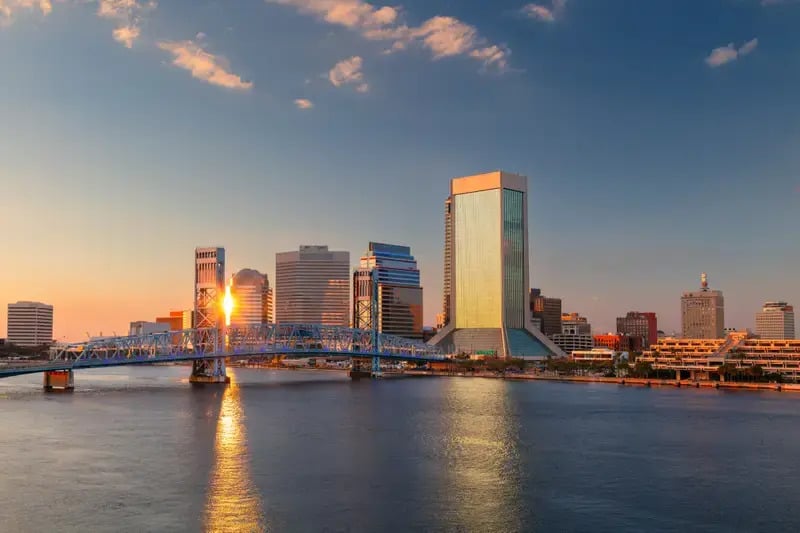
Jacksonville is gaining national recognition as more homebuyers discover what Northeast Florida has to offer.
U.S. News & World Report named Jacksonville the #7 Best Big U.S. City to Live, placing it ahead of other major cities such as Charlotte, Mesa and Houston. The ranking is especially relevant for people considering a move because it evaluates practical relocation factors, including housing affordability, income, commute times and overall quality of life.
For prospective homebuyers, Jacksonville’s top-10 position confirms something local residents have known for years: the city offers an appealing combination of real estate value, employment opportunities, coastal recreation and varied communities.
What Does Jacksonville’s #7 Ranking Mean?
Jacksonville did not simply make a list of Florida destinations. It ranked seventh among the best large cities to live in across the United States.
The top 10 included:
- Oklahoma City, Oklahoma
- El Paso, Texas
- Austin, Texas
- Fort Worth, Texas
- Nashville, Tennessee
- San Antonio, Texas
- Jacksonville, Florida
- Charlotte, North Carolina
- Mesa, Arizona
- Houston, Texas
Jacksonville’s placement is significant because it competes with some of the country’s fastest-growing and most recognizable metropolitan areas. It offers many of the benefits people expect from a major city while maintaining housing costs that can be more accessible than those found in numerous coastal markets.
In the data presented with the ranking, Jacksonville had a median home value of approximately $302,616 and median monthly rent of approximately $1,241. These figures helped demonstrate the city’s balance between metropolitan amenities and relative housing value.
Why Is Jacksonville One of the Best Big Cities to Live In?
There is no single reason Jacksonville made the top 10. Its appeal comes from the way housing, employment and lifestyle opportunities work together.
1. Homebuyers Can Find More for Their Budget
Housing is one of the biggest factors influencing where people choose to relocate. Jacksonville continues to offer opportunities at a range of price points, from condominiums and starter homes to new construction, historic properties and waterfront residences.
Current market data reinforces Jacksonville’s reputation for relative value. During the three months ending in May 2026, the city’s median sale price was approximately $305,000, with homes taking an average of about 60 days to sell.
Zillow also reported that the income needed to afford a typical Jacksonville home was approximately 9.5% lower than the income needed to afford the typical U.S. home as of April 2026.
That does not mean every Jacksonville neighborhood is inexpensive or that every property offers the same value. Prices can vary substantially depending on location, condition, proximity to the coast and the type of home. However, buyers often have more room to compare options than they might in higher-cost Florida markets.
Florida’s lack of a personal state income tax can also be an important financial consideration for people relocating from states that impose one.
2. Jacksonville Has a Diverse Employment Base
A sustainable real estate market needs more than attractive homes. It also needs employment opportunities capable of supporting long-term demand.
Jacksonville has one of Florida’s more diversified industry bases. Major sectors include finance and insurance, logistics and distribution, information technology, life sciences, advanced manufacturing, aviation and aerospace.
This diversity can make the regional economy less dependent on a single industry. It also gives professionals moving to Jacksonville access to career opportunities across corporate, healthcare, technology, military, transportation and financial-service employers.
Jacksonville was also ranked third nationally for economic growth among large cities in 2025. Since 2019, regional economic-development efforts have supported more than 100 business relocations or expansions and over 16,000 direct jobs.
For homebuyers, a growing employment base can support housing demand, neighborhood development and continued investment throughout Northeast Florida.
3. It Offers Big-City Convenience Without Giving Up the Outdoors
Jacksonville provides the employment, healthcare, entertainment and dining options associated with a large metropolitan area, but much of its identity is connected to the outdoors.
The area includes 22 miles of beaches, an extensive park system, historic neighborhoods, fishing, golf, museums and a growing food and arts scene.
Residents can live near the Atlantic Ocean, along the St. Johns River, close to downtown or in a quieter suburban setting. A morning at the beach, an afternoon on the river and an evening in Riverside, San Marco or Downtown can all be part of life in the same city.
This combination is particularly attractive to buyers who want access to urban conveniences without feeling disconnected from nature.
4. Buyers Have a Wide Variety of Communities to Consider
Jacksonville is not a one-size-fits-all real estate market. The right location depends heavily on the buyer’s daily routine, preferred property type and long-term plans.
Some buyers are drawn to historic architecture and established streets near Jacksonville’s urban core. Others prioritize coastal living near Jacksonville Beach, Atlantic Beach or Neptune Beach. Buyers searching for newer homes, larger lots or quieter residential settings can explore communities farther from downtown or in surrounding Northeast Florida counties.
The broader Jacksonville region includes options ranging from oceanfront properties and downtown residences to suburban communities and rural homes.
People considering the surrounding area may also explore locations in St. Johns, Clay and Nassau counties, as well as communities toward Ponte Vedra, Orange Park, Fleming Island, Yulee, Fernandina Beach and St. Augustine. Each area provides a different combination of commute, home style, amenities and pricing.
This variety is one of Jacksonville’s strongest real estate advantages. Buyers are not limited to one type of neighborhood or lifestyle.
5. Jacksonville Continues to Attract New Residents
Jacksonville’s growth is not based only on projections. The city has already experienced substantial population gains.
Visit Jacksonville reported that the city was the fourth-fastest-growing city in the United States in 2024, based on U.S. Census Bureau findings.
The wider Northeast Florida region has approximately 1.7 million residents and functions as the area’s primary economic center. Its location also provides access to destinations such as St. Augustine, Fernandina Beach, the St. Johns River and the Atlantic coast.
For real estate buyers, continued population growth can mean expanding housing choices, more new construction and additional investment in commercial and community amenities. It can also create greater competition in particularly desirable neighborhoods, making local market knowledge important.
What Homebuyers Should Consider Before Moving to Jacksonville
A national ranking is a helpful starting point, but it should not replace detailed research about a particular property or community.
Jacksonville covers a large geographic area, so commute times and access to daily destinations can differ significantly. A home may technically have a Jacksonville address while being a considerable drive from downtown, the beaches or a particular employment center.
Buyers should evaluate:
- The commute during normal weekday traffic
- Property taxes, homeowners insurance and potential HOA or CDD fees
- The home’s age, roof condition and major mechanical systems
- Flood-zone status and drainage history
- Access to shopping, healthcare and recreation
- Planned construction or development near the property
- Resale potential based on location and property type
Flood exposure and insurance costs can vary from one address to another. Buyers should review the property through FEMA’s official Flood Map Service Center and obtain insurance estimates before deciding how much home they can comfortably afford.
These details can affect the true monthly cost of ownership even when two homes have similar listing prices.
Is Jacksonville a Good Place to Buy a Home?
For many buyers, the answer may be yes.
Jacksonville offers a combination that can be difficult to find in a single metropolitan area: relatively attainable housing, a broad employment base, coastal access, outdoor recreation and a diverse selection of communities.
Its #7 position among the Best Big U.S. Cities to Live supports Jacksonville’s growing reputation as more than a vacation destination. It is a major city where buyers can establish careers, purchase homes and choose from several distinct ways of living.
The key is finding the part of Jacksonville or Northeast Florida that fits your priorities. Someone looking for a walkable historic neighborhood may make a very different decision from a buyer seeking new construction, a larger property or quick access to the beach.
Planning a Move to Jacksonville?
Before beginning your home search, identify the locations that work for your commute, lifestyle and budget. Then compare the complete cost of each property, including insurance, taxes and community fees, rather than focusing only on the purchase price.
Working with a real estate professional who understands Jacksonville and its surrounding communities can help you narrow the market, identify potential concerns and make a more informed offer.
Jacksonville’s national recognition may be bringing more attention to Northeast Florida, but the real reason people continue moving here is the range of opportunities available once they arrive.
Ready to explore homes in Jacksonville or the surrounding Northeast Florida area? Contact our team to begin a personalized home search and find the community that best fits your next move.
Check out this article next